Core Instructional Practice

The Cavendish Town Elementary School (CTES) faculty has decided to focus on one Core Instructional Practice all year and to dig deeper and study it in detail. We decided that we want to learn as much as we can about Adjusting Instruction which is defined as:

“Teachers adjusting instruction based on formative assessment so students can progress consistently toward meeting the performance indicators.”

In layman’s terms, this means that as they are teaching, teachers change what they are doing as they observe the children’s level of understanding.

Narrowing our Focus to Yield Greater Results
We are going to share ideas and current practices with each other because as the adage goes, “None of us is as smart as all of us.” This will benefit the veteran and the teacher in the early stages of their career as we can all learn from one another.

In a similar fashion, we will sink our teeth into some research through reading/discussing articles about responding to formative assessment, watching videos of master teachers at work and analyzing them, visiting and observing each other at work to learn new skills and ideas. Michael Eppolito, the Curriculum Director, has offered to help us as well. He will be a tremendous resource – just his website alone is a treasure trove of research, blogs, videos, and deep thinking.

Adjusting instruction is something that effective teachers do naturally all day long, but, with it as our intentional focus – driving ourselves to get better and better at it, we are going to pinpoint areas in our curriculum where we can ramp up the rigor and refine our practice which will have a positive impact on learning and student achievement. This practice will also be the focus of our school-wide Continuous Improvement Plan.

This leads, naturally, into the MTSS (Multi-Tiered System of Support) plan. We define MTSS as follows:

Two Rivers Supervisory Union infrastructure and system of supports is designed to provide excellent universal proficiency-based instruction targeted supplemental instruction for students with skill and understanding gaps, and intensive, focused intervention for students with significant need.

We are just beginning this process at the two levels in the building – primary and intermediate.

The primary teachers will be identifying the areas of need for students in the area of guided reading and will deliver direct instruction to students with the help of paraeducators, special educators and the Title I teacher. This is very exciting for us all.

The upper-grade teachers deliver universal instruction to the children in the areas of reading and mathematics based on data so that the child is already receiving targeted instruction as a daily dose. What we will be adding this year is the regular progress monitoring so teachers can be even more responsive to the child’s progress. Exciting times ahead!

Deb Beaupre
Cavendish Town Elementary School Principal


Shifts in Teaching and Learning – MHS

This past school year, Mount Holly students and staff worked towards making shifts in how we teach and learn to become much more proficiency based and personalized. Two major areas that we have focused on include student-led conferences and celebrations of learning.

While students in some of the older grade levels have had student-led conferences in the past, this was the first year that students in Pre-K through grade six have all had student-led conferences. It was truly amazing to see students throughout the entire school plan and lead their own conferences. Students selected work to share with their parents that was evidence of their learning and presented data that demonstrated growth in key areas. The ownership that students showed was clearly evident even in our youngest learners.

At the end of the school year in June, we organized a school wide celebration of learning in which all of the students shared various aspects of their learning. Students carefully selected and presented a wide range of evidence of their learning. The pride students showed was inspiring, and parents were impressed with the quality of students’ work. In the coming school year we will be building on this work to develop a more comprehensive portfolio system and personalized learning plans.

Craig Hutt Vater
Mount Holly School Principal

A New Definition for Exhibiting Student Work

Most of us remember our teachers hanging our work in our classrooms. They would neatly hang our best work up on the bulletin board in the back of the room or lining the hallway. You also may remember putting on a presentation for your parents or your classmates. Perhaps it was presenting why your seeds grew better in water or soil as a part of a science fair, reciting a poem you memorized, or you dressed up as the person you chose for your biography project. Depending on your experience, these exhibitions were a positive or a negative experience. Perhaps you still proudly remember the A+ paper your teacher hung up, or you always get a knot in your stomach remembering the speech about Abraham Lincoln you gave before parents for your seventh-grade social studies class.

Regardless of your experience with exhibiting your work, the product or performance was the common defining trait. In Two Rivers, we are expanding that definition to include explanations of learning connected to that product or performance. That means when you walk through the halls of your child’s school and look at all the beautiful artwork or the results of the latest science experiment, you should also see an explanation of the learning that your child did to produce that work. That explanation may come from the teacher or the student. In some cases, you may even see an explanation of why a student chose to display their work. This new way of exhibiting student work is part of our Core Instructional Practices.

Why Displaying Learning Matters
It may seem obvious to say that students go to school to learn. When you walk into a classroom, you can see and hear the learning. Sometimes, however, it is unclear with work hanging on a wall what the learning is. Our goal is to make student learning visible throughout our school buildings. We want to create an atmosphere where both students and teachers are putting up work or making presentations that clearly show what they have learned and why that learning matters.

What You Should Look For in Your Child’s School
The next time you walk through your child’s school take a moment to look at the work hanging on the walls. Look for a description of the learning that elicited the work; an “I can” statement, a set of criteria that describes what quality work looks like, or an analysis of why a student chose to display a particular piece of work. Take some time to consider how the work on the walls is more than decoration or examples of “good work,” but how they contribute to the culture of learning in the building.

Michael Eppolito,
Director of Curriculum

Personalized Learning

This spring I had the opportunity to visit Ms. Baitz’s sixth-grade classroom at LES. After school one day Alexis shared a notebook with me that holds her Measures of Academic Progress (MAP) assessment results and goals that she has set for herself based on those results. At that time, Alexis set a goal to increase her understanding of an author’s intention.  Then on a subsequent day, Colline shared her notebook and told me she was focusing on informational text, looking for key ideas and details that support those ideas.

In addition to learning about personalizing learning for our sixth graders, Ms. Baitz showed me an aspect of her work in proficiency-based learning. The teachers throughout our supervisory union are working on designing modules of learning that typically have several lessons. These lessons are designed to deepen and optimize learning with the expectation that our students will demonstrate their learning and meet proficiency.

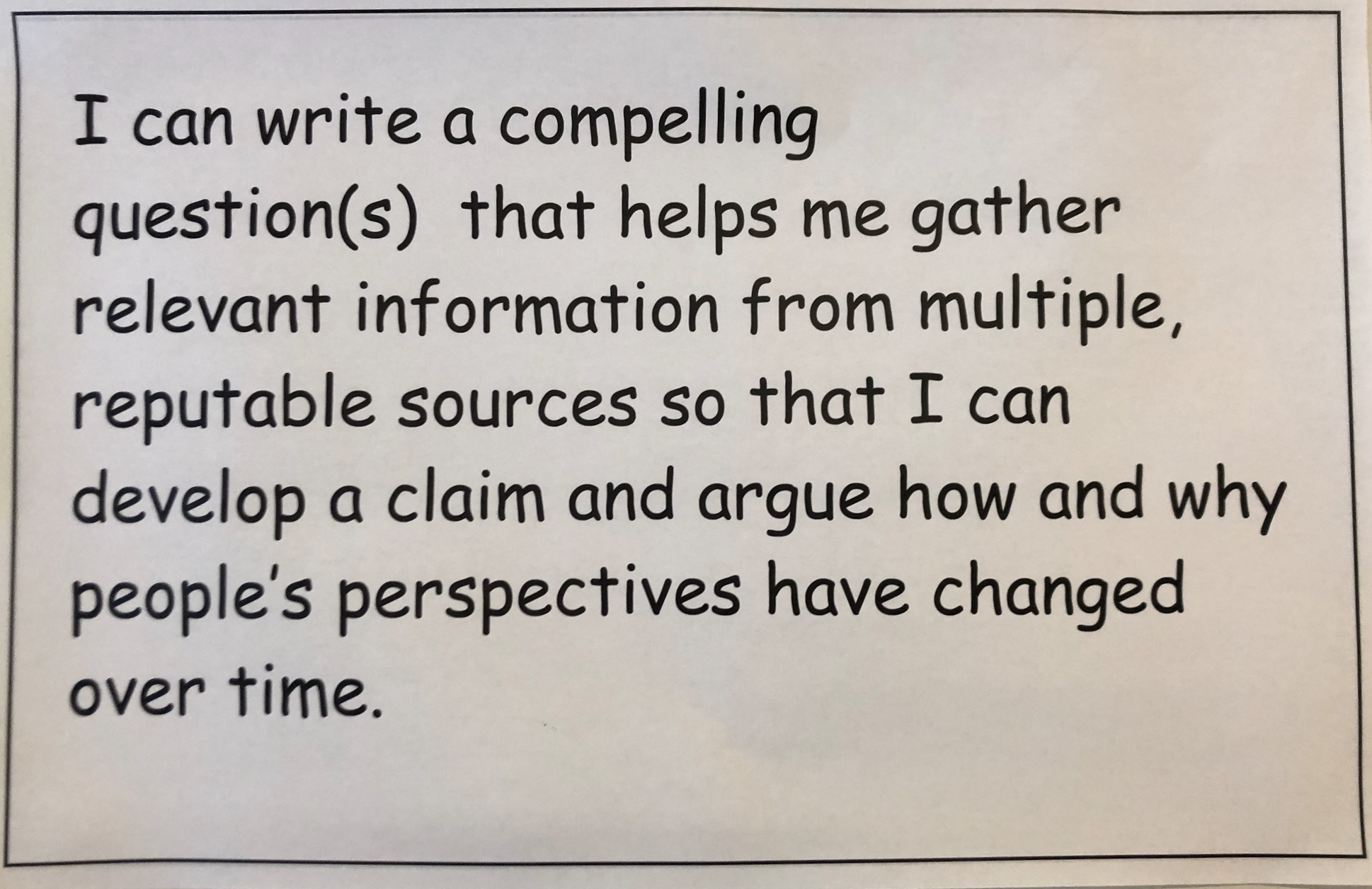
Above is a Performance Learning Standard that the students in Ms. Baitz class were working to achieve. The students developed compelling questions, researched the mills and textile factories that were scattered throughout Vermont and then made claims based on that research.  Throughout this module, Ms. Baitz checked for understanding and developed a variety of assessments to gauge student learning.

Meg Alison Powden

Welcome to the Blog

We’re setting up this blog to highlight the great work that is happening in our schools. In addition to Facebook and Twitter notifications on our website, you will have another way to access information about our schools.  

I am so proud of and grateful for our teachers, staff, and students. Our teachers design relevant and engaging lessons, our staff supports our students in their respective roles and our students work to grow socially, emotionally and academically. Each of our schools, Black River High School Middle School (BRHSMS), Cavendish Town Elementary School (CTES), Chester-Andover Elementary School (CAES), Green Mountain Union High School (GMUHS), Ludlow Elementary School (LES) and the Mt. Holly School (MHS) are wonderful places to learn and grow.

As you read and see the pictures in our highlights, let us know if you are aware of work in our schools that you would like us to share with the greater community. Together we can create a celebration of learning.

Meg Alison Powden
Superintendent of Schools