Black River Autumn Colors

While the incredible colors of our fall foliage slip away as the weather begins to turn, the season of college acceptances begins with our Black River seniors donning their own spectacular colors – those displayed on the folders of college acceptances! 

Congratulations are extended to Mariyah Fales (pictured below) with her early acceptance documents from Franklin Pierce University through a rolling admissions process.

Mariyah Fales with her early acceptance documents to Franklin Pierce University
Mariyah Fales

Our seniors are immersed in the process of completing college applications, with most deadlines for early decision/action a handful of days away on November 1 and the regular deadline primarily on January 1.  Our Guidance Department is busy meeting with students, formalizing college applications lists, and supporting students as they navigate this sometimes cumbersome and stressful process.  There is a good match of a college for every student seeking to move on in higher education, and our work is to help guide the student in that journey.

While the cost of college can be daunting, there are many financial resources available through the Vermont Student Assistance Corporation (VSAC), individual college scholarships/grants, and local funding sources.  Students and parents are encouraged to visit www.vsac.org for a host of resources on the college funding opportunities and additional support for the college application process.  The decision for college or other avenues of post-high school education based solely on financial reasons should not be made without exploring all of these options; there are many pathways to attain further education for deserving Vermont students.

Link to VSAC Website
Link to the About VSAC Webpage

Black River High School will host a Financial Aid Informational Session on November 7, at 6:00 p.m. for students and parents in its library.  A representative of VSAC will be on hand to walk participants through the completion of the FAFSA, the form necessary to apply for financial aid. Come and ask all your questions on financial aid. 

It is an exciting school season as the colors of stick season approach us. While the outside landscape may turn gray and barren, the futures of our seniors color our worlds every day within our walls.  If you have a current senior, please do not hesitate to call on us for any assistance throughout this critical year of decision-making. In partnership with our families, we can best support the success of all our students.

Dr. Colleen Palmer
Black River High School Guidance Director

Budgeting Season

It is budgeting season. 

This means it is time for us to create a budget that will support the work that goes on in the classrooms and that will help the students achieve academic excellence.

The budget process is reflective. 

Reflection plays a large part in the everyday professional lives of educators. At the end of a lesson, they reflect upon whether that worked as well as they intended. In June, teachers are thinking and planning for the coming year as the current one is slowly winding down. The summer is spent planning and preparing, thinking about whether the plans aligned with the outcomes, and making adjustments.

It is the same for the budget.

I look at the year and I think about what we spent, what we needed and went without, what we created workarounds to procure, what we invested in and what we should set aside next time around. I look at field trips, supply lines, repairs and upkeep, food usage. Nothing goes unexamined.

What’s interesting about school is that it is one of those experiences that binds us together; most everyone went to school. Schools have changed a lot since they first began calling a building with a teacher an educational institution – they have changed a lot since the late 70s when I attended, but in fundamental ways, they have not. Kids still love books, recess, and their teachers. Littles still want to learn cursive, a lost tooth is still A Big Deal, and field trips are still special. Accordingly, the school has changed in many ways as well – now books might be on a little laptop or an iPad, typing can be as fast as cursive, one can take field trips by way of the internet. 

Let’s take that last, because this is an example of why school costs more money now. In order to teach Vermont early history, teachers talk about settlers and the chores of a homestead and The Fort at #4. We sometimes get to go as far as Sturbridge Village if we have saved our pennies to see an entire village in action. One way to show and teach at the same time is to employ the internet – YouTube or the sites of the historical places themselves to “tour” the locations virtually. In order to do that, teachers need a way to show everyone – a screen big enough to see, a projector of some sort and a reliable connection ready at a moment’s notice. I’ve been teaching long enough to have started before the internet showed up, so we did it with photographs, slides, filmstrips and audio cassettes – which all cost more money back then as they were the latest technologies. Now, however, we can join a tour LIVE at Plimoth Plantation and learn firsthand what a hearth is. 

Colonial Hearth

So what?

Well, if you are a kid who is lucky enough to have parents who have jobs with vacation time, maybe you have gone as a family to see these national treasures. But, say your folks work 2-3 jobs and you don’t really take a vacation and you have never ever gone camping, either, which takes time and money; what are you going to know about a hearth? When have you seen one, where have you heard the term?

The “so what?” is that the budget helps fulfill the promise and the premise on which this country and the educational system is founded. 

The budget is about equity.

The internet connection, the SMART board, or whiteboard or the iPad helps level the playing field so that every child in the room sees several versions of a hearth from colonial times and that is both an example of how the budget is higher than in days gone by and how the budget helps education fulfill its original promise in creating schools – common schools. Common schools originated in New England as community-funded instruments of education for all children of the region or neighborhood. Curti (1935)

Thus, single parents who can’t afford family vacations because they are working or grandparents raising grandchildren with no transportation can rest assured that their student is receiving a state of the art education even at the small rural schools like those we have in this Supervisory Union because the community, from the taxpayer to the board member to the Superintendent to the administrators to the teachers, are engaged in continuous cycles of reflective practice to improve, refine and hone the skills and talents we have, the education we offer and the stewardship of the resources entrusted to us to create an informed, enlightened and engaged citizenry.

Debra Beaupre
Cavendish Town Elementary School Principal

Merle Curti (1935). Social Ideas of American Educators. Charles Scribner’s Sons.

Equity, After School and the TRSU Continuous Improvement Plan

After school enrichment is designed to not only support the working families of our communities but exist to create equity. In Paul Gorski’s book Reaching and Teaching Students in Poverty; Strategies for Erasing the Opportunity Gap, we are presented with an almost identical dilemma to that which our TRSU Continuous Improvement Plan addresses. Gorski states, “…this is why the condition we call an ‘achievement gap’ is more rightly understood as an opportunity gap. After all, disparities have nothing to do with student effort or intelligence. They only reflect students’ disparate levels of access to the resources and opportunities other students, no smarter or more dedicated to school enjoy.”  Simply put, these students are struggling due to fewer resources in their “toolbox”.

Gorski offers a set of instructional strategies that he believes work in erasing the opportunity gap and that aid in making schools the great equalizers they were envisioned to be. We at TRSU know that our after school programs’ academic focus on enrichment opportunities target 8 of the 11 suggested strategies. As such, we increase student opportunity and help supplement their toolbox when we:

  • Prioritize literacy instruction across the curriculum
  • Promote literacy enjoyment
  • Have and communicate high expectations
  • Adopt student-centered, rigorous teaching practices
  • Teach critical literacy
  • Make curricula relevant to students experiencing poverty
  • Incorporate music, art, and theater
  • Incorporate movement and exercise into learning

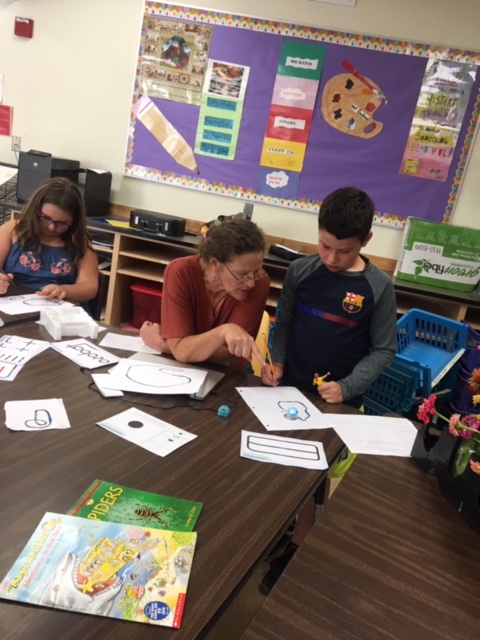
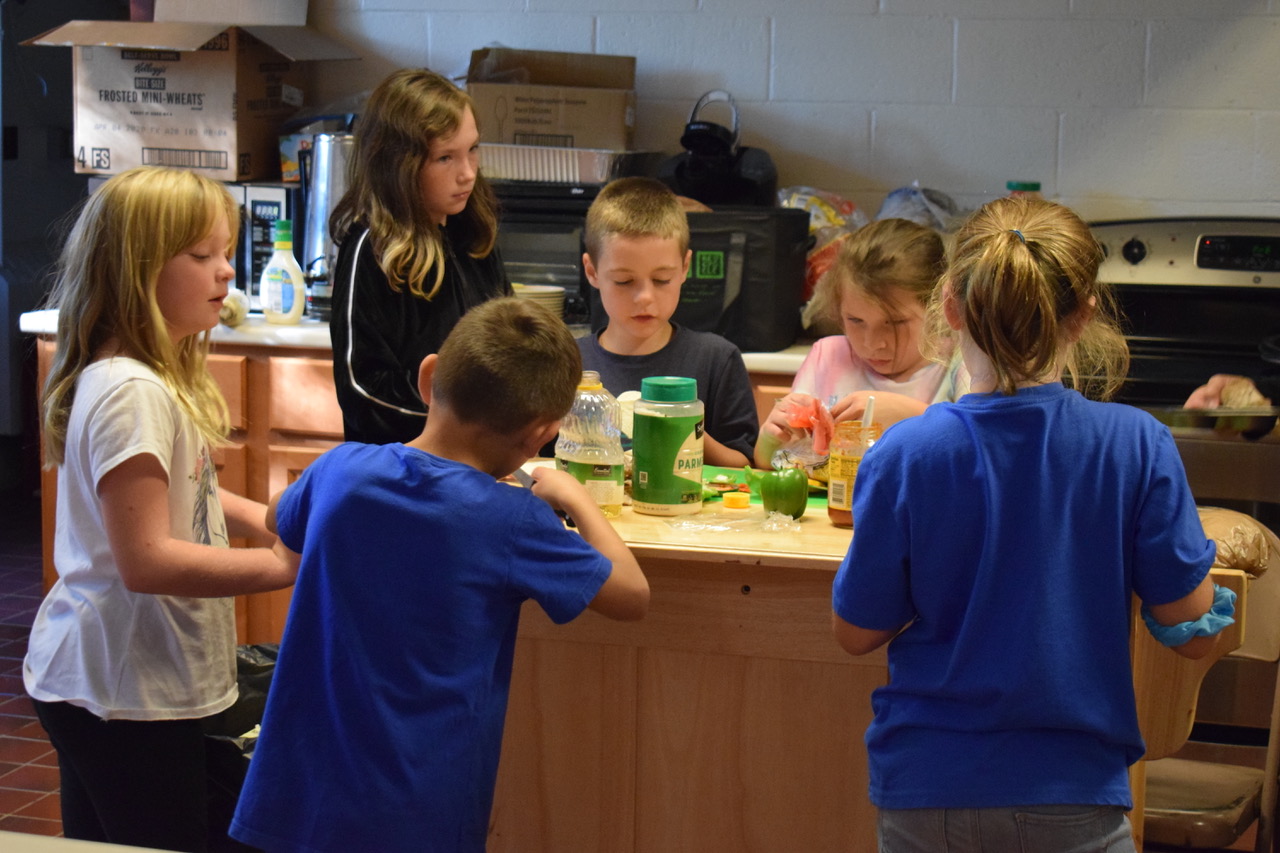
Each year the aforementioned gap widens as students grow and collect experiences and opportunities outside of the classroom. At TRSU, our after school programs are committed to providing a variety of learning, and life experiences to all students. These opportunities show up in programming such as Tae Kwon Do lessons, ballet classes, coding, foreign language, tutoring, robotics, hunters safety, African drumming, yoga, circus club, art, drama, and Learning Lab. Overcoming potential obstacles such as socioeconomic class, geographic barriers, lack of transportation, or long parental/guardian working hours, the ASP is bridging the gap for families by bringing experiences directly into our communities.

Beyond continuing to provide high quality and affordable opportunities for students this year, we are also looking to expand our linkages to the school day. In conjunction with the Weikart Center and our Youth Program Quality Assessment yearly action plan, we are working closely with Curriculum Coordinator Michael Eppolito to design an electronic portfolio. These portfolios will help students progress from writing goals and learning targets, to producing and capturing evidence that supports classroom goals and PLPs. It’s an exciting time in education and we at after school look forward to supporting youth opportunity and capturing student growth beyond the classroom walls.

Venissa White
TRSU After School Program Director

Black River Transition

As many of you recall, during 2016 and 2017 our local school boards had to grapple with the Act 46 legislation. This law required our smaller districts to form larger districts. Act 46 Study Committees were formed and then the recommendations of the Committees were brought to the voters in each of our towns including: Andover, Baltimore, Cavendish, Chester, Ludlow, Mount Holly and Plymouth. After all of the votes were counted, our supervisory union needed to transition from ten districts to two, Green Mountain Unified School District (GMUSD) and the Ludlow-Mount Holly Unified Union School District (LMHUUSD). Within GMUSD are the Cavendish Town, Chester-Andover and Green Mountain schools and LMHUUSD has the Black River, Ludlow Elementary and Mount Holly schools.

In addition to transitioning to two new districts, we knew the formation of LMHUUSD meant that our Black River (BR) school would be closing. It is sad and difficult at times to accept the fact that BR will close in June of 2020. BR is precious; it is a school with rich traditions and is known for graduating students who are very successful in their chosen fields. The relationships between administration, staff and students are close and significant. 

The administration and staff at BR are amazing. Even with the painful news of an upcoming school closure, they have kept our students at the forefront of their thinking and work. Last spring the teachers and staff decided to enter this academic year with the motto of “Finding Joy.” They plan on celebrating and honoring our students, alumni and school. Currently, we have two Transition Teams meeting and planning. One team is focused on our students and staff. The other team is meeting to work out all the logistics for closing a school. We are grateful for the positivity and support we receive from the LMHUUSD school board members as we work to educate our students on a daily basis and plan for this closure.

Next year our secondary students will have school choice. This Monday, September 16th at 6:00 p.m. we will be holding a school fair for our families. We will be welcoming the seven schools that our students have told us they want to attend. They are interested in learning more about Green Mountain Union, Black River Independent School, Long Trail, Mill River, Riverside Middle, Springfield High and Woodstock Union schools. Representatives from each of the schools will share their academic programming and co-curricular opportunities. After each of the schools have presented, families will be able to walk around to visit and ask questions of those representatives.  I will continue to keep you updated regarding BR’s transition throughout the school year.

Meg Alison Powden
Superintendent of Schools

Title I Parent and Family Engagement Resources

Welcome Back to the 2019-2020 School Year!

On behalf of the School-wide Title I Program Staff, below are some Family Resources that we hope you will find helpful as we kick off the new school year.

Title I Parent and Family Engagement Resources

The following websites offer free resources for parent and family engagement. Included are both online resources for parents and families. Many of these resources are available in English and Spanish and some are available in other languages.

Free Resources for Parents and Families:

WONDEROPOLIS

www.wonderopolis.org

Wonderopolis is a place where natural curiosity and imagination lead to exploration and discovery in learners of all ages. Each day, we pose an intriguing question—the Wonder of the Day®—and explore it in a variety of ways.

STORYLINE ONLINE – SCREEN ACTORS GUILD

www.storylineonline.net

The SAG-AFTRA Foundation’s children’s literacy website, Storyline Online, streams imaginatively produced videos featuring celebrated actors.

READ.GOV – THE LIBRARY OF CONGRESS

http://www.read.gov/books

The Center for the Book in the Library of Congress invites people of all ages to discover the fascinating people, places and events that await you whenever you read. Books online.

30 DAYS OF FAMILIES LEARNING TOGETHER

30days.familieslearning.org

National Center for Families Learning’s guide to 30 Days of Families Learning Together provides a month’s worth of family literacy activities and practices designed to inspire family memories rooted in imagining, playing, and learning together.

CULTIVATING READERS

www.familieslearning.org

The Cultivating Readers Family Guide provides tips and to grow reading skills from birth to age eight. The guide will help parents keep their shared learning activities with their children fun and part of their everyday routine. Available in both English and Spanish. This is a bookmark template which offers ideas for parents on how to make the most of the time they spend reading with their child. It also features a question-and-answer guide to help children develop oral language skills and build vocabulary.

SCHOLASTIC FAMILY PLAYGROUND

Interactive games, printables and videos. Ages 3 – 7

www.scholastic.com/parents/play

Interactive games, printables and videos. Ages 8 – 12

www.scholastic.com/kids

FAMILY TIME MACHINE

www.familytimemachine.com/about

The Family Time Machine™ is fueled by your family’s imagination! It recharges its batteries when your family turns moments of togetherness into family time by learning, imagining, and playing together!

CURIOSITY MACHINE

www.curiositymachine.org/challenges/?free=1#challenges

Build hands-on engineering design challenges, through building, you learn not only how something works, but why it works. Helping children to succeed by being curious, creative, and persistent. Free challenges.

DAY AT DOLLAR GENERAL

http://www.familieslearning.org/interactive_tools/day_at_dollar_general

NCFL and the Dollar General Literacy Foundation have teamed up to educate families about money management through an online interactive game makes it fun and educational for both children and parents to learn basic budgeting skills.

RENEGADE BUGGIES

renegadebuggies.familieslearning.org/index.html

Interactive game focused on financial literacy by exploring consumer strategies.

MYPLATE KIDS’ PLACE – USDA

www.choosemyplate.gov/kids%20

www.choosemyplate.gov/families

Resource for kids, parents, and teachers. Resources include games, activity sheets, kid-friendly recipes, and physical activity tips. Kids can also pledge to become MyPlate Champions.

Practical tips and tools that have worked for other families, videos, recipes and budgeting.

PARENTS AND TEACHERS AS PARTNERS – CRAYOLA

www.crayola.com/for-educators/resources-landing/parents-and-teachers-as-partners-landing.aspx

Addresses issues which affect teachers and parents in a format of questions and answers. Both parents and teachers have information to share with each other which benefits the children we care for and teach.

Trauma Informed Practices

The Two Rivers Supervisory Union will be collaborating with Susan Mordecai to provide individual eight week sessions within our schools. The focus of the sessions will be trauma informed. The theme of the sessions is The Mindful Self. This will provide additional follow up and enhancement to the current professional development that Two Rivers is currently participating in regarding Trauma Informed Schools.

Susan Mordecai

Susan Mordecai is the Founder and Director of Mindful In Vermont, which provides educational training, consulting, and supervision, for both students and staff members. Susan has crafted the Mindful SELF program with a focus on Mindfulness, and Social Emotional Learning. Susan holds a Level II Teaching License from the VT Agency Of Education as well as several certifications for teaching mindfulness. Susan has a M.S. in Special Education and a M.A. in Educational Psychology.

What am I feeling right now

Over the past six years Susan has developed and implemented the Mindful SELF program that imparts self- awareness, social-awareness, focused attention, kindness towards self and others, decision making and ways to cultivate resiliency in classrooms, homes and communities. Trauma informed practices are woven in to help support resiliency and healthy relationships. Currently Susan offers her services to TRSU, the Windsor County Wellness Initiative and other organizations within Windsor County.

New Teacher Orientation

This year’s New Teacher Orientation was another successful event. All of the teachers that will begin working in a couple of weeks within the Two Rivers Supervisory Union (TRSU) got together to learn all of the ins and outs of working within this district.

Some of the topics covered in this 2-day session were learning about our philosophy and practices as they relate to proficiency-based education, understanding our core instructional practices, finding how to access employee benefits, meeting the TRSU staff, and of course begin making connections.

The majority of the trainings were done with the group as a whole, but the teachers also had the opportunity to break out into smaller groups by each individual school where they met with the principals and other school faculty.

New this year, each of the teachers had the chance to do a quick video introducing themselves that will go up next week on the TRSU social media platforms as a way for students and parents to get to know them a little before school starts. A good time was had by all and they are excited to get started!

Leaders of their Own Learning

Last year I read Leaders of their Own Learning with the TRSU Administrative Leadership Team. I found the book to be closely aligned with our district initiatives toward proficiency-based education, personalized learning and core instructional practices. I purchased copies for each of the Chester-Andover Elementary School teachers so that we may study it together this year as part of our work to improve academic achievement for all learners.

Book: Leaders of their Own Learning - Transforming Schools Through Student-Engaged Assessment

The strategies and tools outlined in this book will help transform the way our students and teachers partner together. The videos provide real classroom examples of how instructional practices can be implemented across grade levels.

Through shared reading and reflection of classroom implementation, teachers will analyze achievement data, help students identify their own strengths and challenges, and give them the skills to become engaged in setting their personal learning goals. As we move toward the use of proficiency-based learning and reporting, students will gain voice and choice and have a much deeper understanding of who they are as learners.

Our students are fortunate to be experiencing a huge paradigm shift in education. Not only will they know themselves as learners early in their education, they will partner with teachers to determine the pace and direction of their learning and have multiple pathways to demonstrate mastery of content.

Leaders of their Own Learning is both timely and relevant to the work we have begun and will serve to guide and focus our continued school-wide efforts toward academic equity and excellence. I cannot wait to dive into this book with the CAES staff this year!

Katherine Fogg
Chester-Andover Elementary School Principal

End of Year Activities at LES

The end of the school year brought lots of activities to the Ludlow Elementary School Students.

Grades 3-6 performed “The Jungle Book” under the direction of Ms. Marks and Mrs. Buckley. More than 30 students were involved, performing for Cavendish Elementary School, Mount Holly Elementary School, and Ludlow Elementary School students on June 4th with an evening performance for the general public.  

The After School Program is thriving and we thank the staff for all the wonderful activities the students enjoyed. The children got to participate in everything from science, art, and woodworking to stop motion animation and more. Thank you to Rachel Karner, Lisa Marks, Jake Parker, Shona Trimboli, Zoe Trimboli, and Janelle Wilfong for your dedication to our students.

After School Program

Grades K-3 enjoyed a collaborative end-of-year celebration at Dorsey Park. Hot dogs and watermelon were just a few of the items served for lunch. Lots of games were played and fun was had by all.

Flexible Pathways

Green Mountain Union High School (GMUHS) has been providing students with increased opportunities to personalize their education. Shannon Parker (Flexible Pathways Coordinator), Pam O’Neil (Guidance Department Director) and Ally Oswald (Guidance Counselor) work diligently to offer all of our students new possibilities for pursuing their individual goals. Here are some of the specific opportunities available to Green Mountain students:

Blended Learning Opportunities:

During the 2018-2019 school year, students were able to take a Dual Enrollment U.S. History course affiliated with The Community College of Vermont, on the GMUHS campus. Students who completed the course received college level credit. This past year, 13 students took advantage of this opportunity. The class will be offered again during the 2019-2020 school year, and at this time we have 20 students enrolled in the course.

Career Technical Education:

The Guidance Office has been comparing the proficiencies that students are earning at River Valley Technical Center with the proficiencies required to graduate from GMUHS so that students will know where any gaps exist. Shannon worked with the RVTC Carpentry Program instructor, the GMUHS math department, and the VTVLC to create a PASS (Personalized Assessment of Student Standards) — a proposal so that a student could gain content knowledge of Algebra through ‘real life experiences’ in the Carpentry course offered at RVTC.

Early College:

Shannon assists in connecting interested students in the Junior class with early college placement through participating Vermont Colleges/Universities. In this program, students are concurrently involved in high school and a post-secondary institution. During the 2018-2019 school year, we had a student studying at Castleton University. For the 2019-2020 school year, we will have a student studying at Norwich College.

Community Based Learning:

Students are connected to opportunities within our community and beyond.

  • This includes internships, volunteering & work study/shadow opportunities.
  • Shannon works with John Donorum (GM’s School-to-Work Coordinator), assisting with job placements.
  • A Bulletin Board is available in the Flexible Pathways room with the most recent job, internship & work study opportunities.

Learning Virtual Opportunities:

Shannon assists students with the enrollment process for online courses through Vermont Virtual Learning Cooperative & Brigham Young University (both offering high school courses).

  • After enrollment, students receive assistance in obtaining the required materials for the course.
  • Students work in the Flexible Pathways classroom during the week. Shannon monitors and assists them with any technical difficulties or helps connect them to their online teacher.
  • Each student is required to have a weekly check-in with Shannon to help them stay on track. If they fall behind, they create a pace chart with their online teacher or with Shannon.
  • Students receive any necessary assistance with the technology required to complete discussion based assessments, conferences, or meetings with their online teacher.
  • For students taking BYU courses, Shannon proctors their final exam.
  • In 2018-2019, 29 students were enrolled in over 50 online courses. For 2019-202, 30 students have enrolled in 59 online courses.
  • For Summer 2019, Shannon assisted the Math department in enrolling 14 students to online recovery courses through Vermont Virtual Learning Cooperative. This opportunity was offered to students who did not gain proficiency within a math course that they were enrolled in during the 2018-2019 school year.

Dual Enrollment:

Shannon assists students with setting up Dual Enrollment courses through participating Vermont State Colleges/Universities for Fall, Spring & Summer courses.

  • Once they have enrolled, Shannon helps students apply for their dual enrollment vouchers. All Vermont students have two dual enrollment vouchers to use during their Junior & Senior years in high school. Shannon assists in keeping track of the number of vouchers that each student has utilized.
  •  Students receive assistance in ordering any required textbooks or course materials.
  • If students are taking a dual enrollment class on a college campus, Shannon helps them with the logistics of commuting as well as scheduling; making sure that the course on campus will work around or in conjunction with their GMUHS schedule. Students must sign a waiver if they will be traveling to a college campus from GMUHS.
  • For students taking dual enrollment courses online, they are scheduled to work in the Flexible Pathways classroom during a scheduled class block each week. Shannon monitors and helps students who encounter any technical difficulties or need assistance in contacting their professor.
  • Each student is required to have a weekly check-in with Shannon to help them stay on track. If they fall behind, they work with Shannon to develop strategies to get them back on track and stay on task.
  • Once students complete their coursework, the flexible pathways classroom provides a quiet space to take the final exam.
  • 18 students enrolled in 24 dual enrollment courses during the 2018-2019 school year. For 2019-2020, 12 students are enrolled 21 different dual enrollment opportunities.

In the fall of 2018-2019, 52 students were scheduled into the flexible pathways classroom. These students included those working on independent projects or coursework as well as those enrolled in college or online courses.

The number of  students receiving support and using the Flexible Classroom space will increase in 2019-2020 as we continue to match opportunities to students’ individual education needs.

Lauren Fierman
Green Mountain Union High School Principal