Most of us remember our teachers hanging our work in our classrooms. They would neatly hang our best work up on the bulletin board in the back of the room or lining the hallway. You also may remember putting on a presentation for your parents or your classmates. Perhaps it was presenting why your seeds grew better in water or soil as a part of a science fair, reciting a poem you memorized, or you dressed up as the person you chose for your biography project. Depending on your experience, these exhibitions were a positive or a negative experience. Perhaps you still proudly remember the A+ paper your teacher hung up, or you always get a knot in your stomach remembering the speech about Abraham Lincoln you gave before parents for your seventh-grade social studies class.
Regardless of your experience with exhibiting your work, the product or performance was the common defining trait. In Two Rivers, we are expanding that definition to include explanations of learning connected to that product or performance. That means when you walk through the halls of your child’s school and look at all the beautiful artwork or the results of the latest science experiment, you should also see an explanation of the learning that your child did to produce that work. That explanation may come from the teacher or the student. In some cases, you may even see an explanation of why a student chose to display their work. This new way of exhibiting student work is part of our Core Instructional Practices.


Why Displaying Learning Matters
It may seem obvious to say that students go to school to learn. When you walk into a classroom, you can see and hear the learning. Sometimes, however, it is unclear with work hanging on a wall what the learning is. Our goal is to make student learning visible throughout our school buildings. We want to create an atmosphere where both students and teachers are putting up work or making presentations that clearly show what they have learned and why that learning matters.
What You Should Look For in Your Child’s School
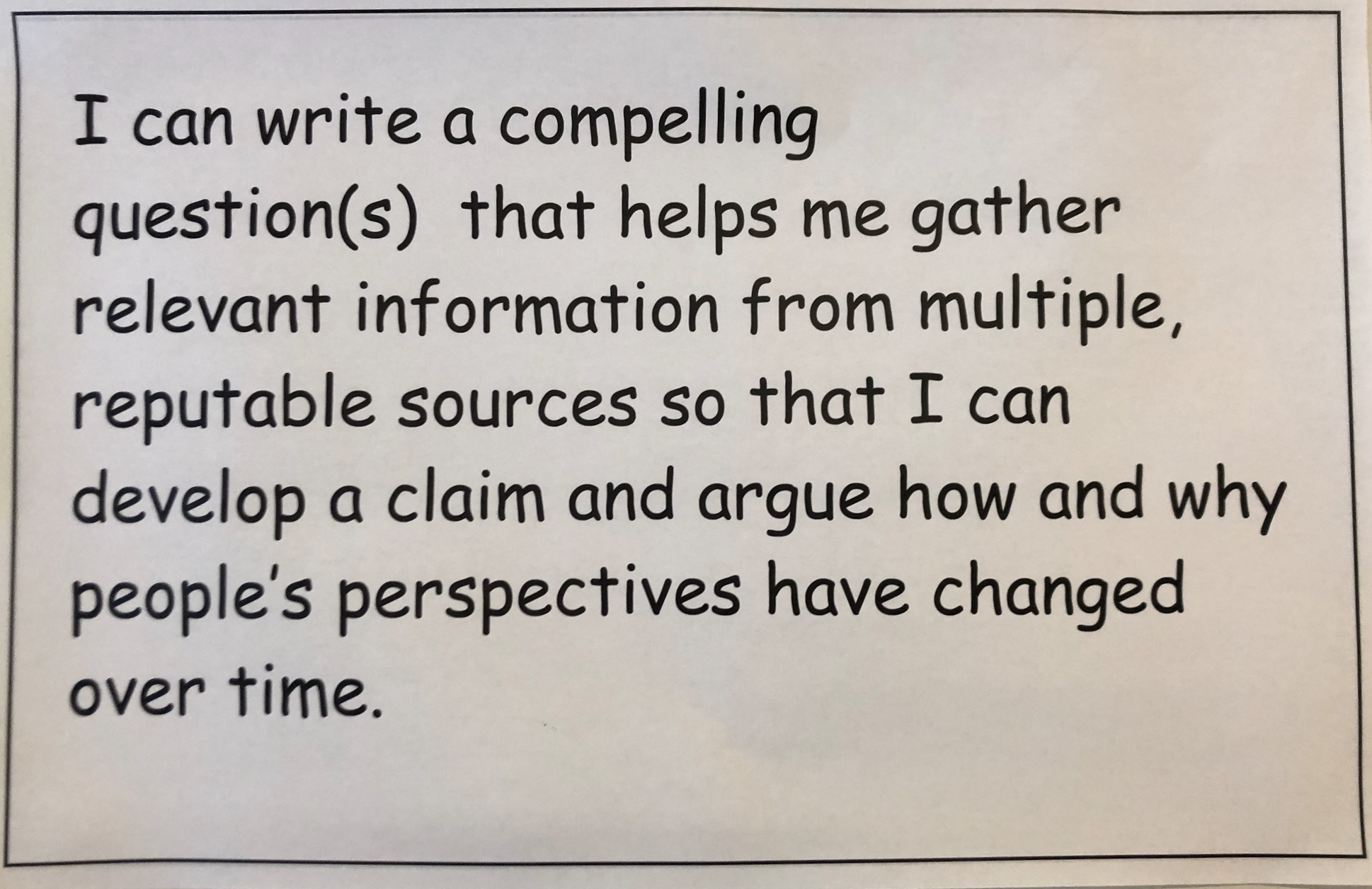
The next time you walk through your child’s school take a moment to look at the work hanging on the walls. Look for a description of the learning that elicited the work; an “I can” statement, a set of criteria that describes what quality work looks like, or an analysis of why a student chose to display a particular piece of work. Take some time to consider how the work on the walls is more than decoration or examples of “good work,” but how they contribute to the culture of learning in the building.
Michael Eppolito,
Director of Curriculum




 Two Rivers Supervisory Union Blog